Picture in, game out
Picture in, game out: a dragon drawing becomes a GBA castle shooter
This is one real img2gba session, start to finish. A simple drawing of a green dragon with orange wings went in as the player, with a two-sentence prompt for a side-scrolling shooter. 3 minutes 5 seconds of agent time later there was a Game Boy Advance game: the dragon, whole and in its own colors as one 32 x 32 sprite, flies over a castle and breathes fireballs at bats, with a health bar, a score and a knight boss. It cost 10 gems, from the free gems a new account starts with.
Also in: Español · Deutsch · Français · Português · Italiano · Nederlands · Svenska · Norsk · Bahasa Indonesia · Türkçe · Polski · Tiếng Việt · Русский · 日本語 · 한국어 · 繁體中文
On this page
Every image below is a screenshot of that session.
The picture
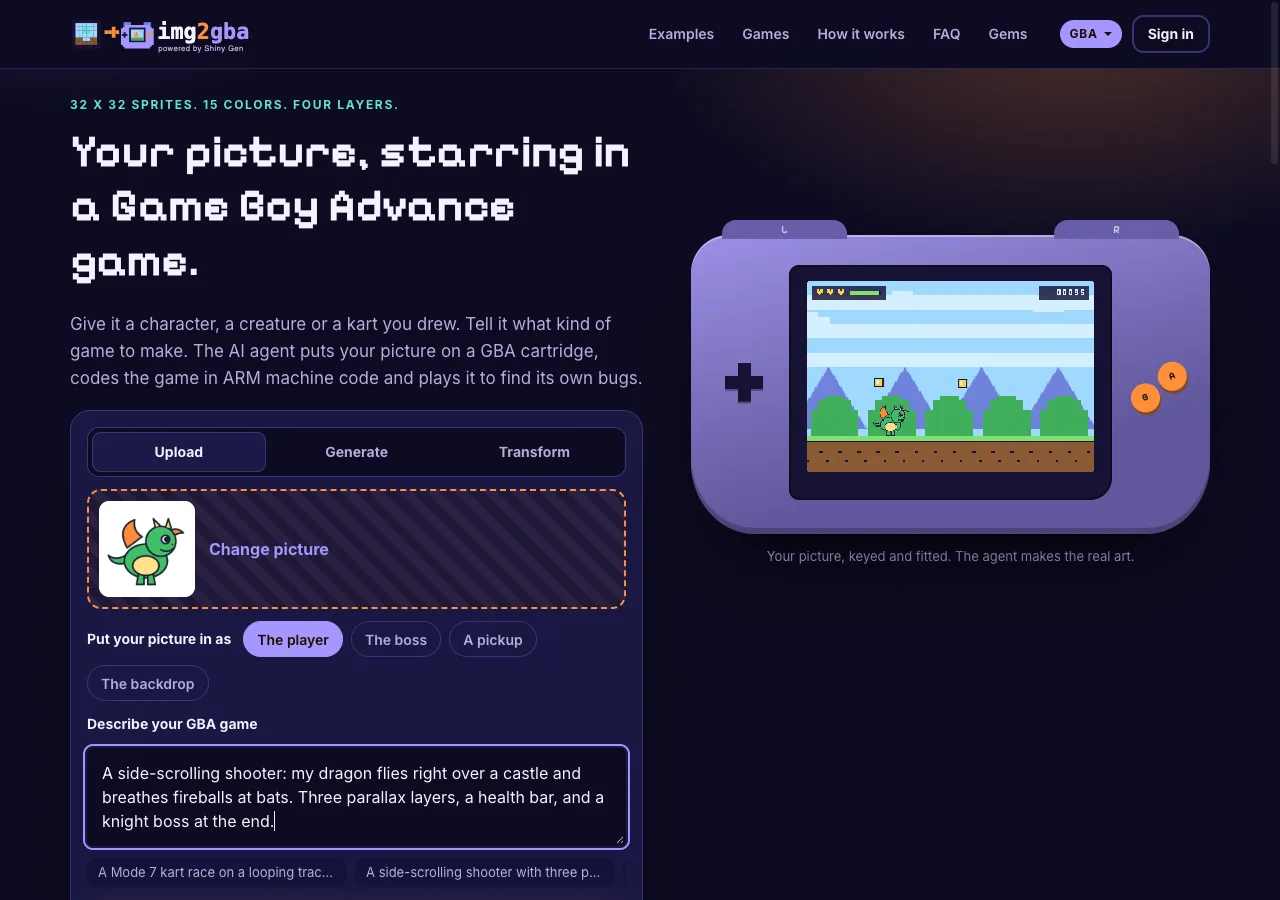
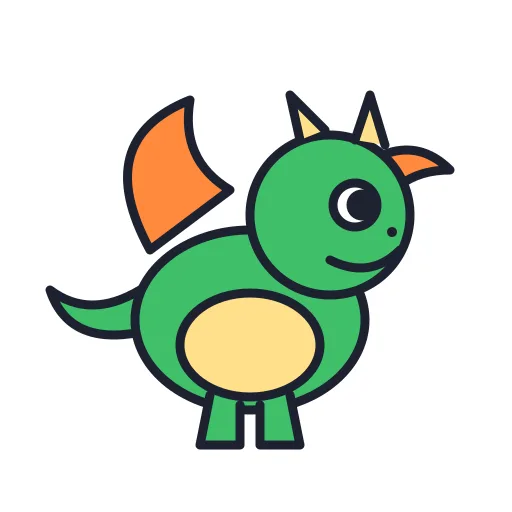
A flat cartoon dragon: green body, pale yellow belly, orange wing, two little horns, one big eye, a thick dark outline, on white. Six or seven flat colors in all, which fits comfortably inside the 15 colors a GBA sprite keeps.
The prompt
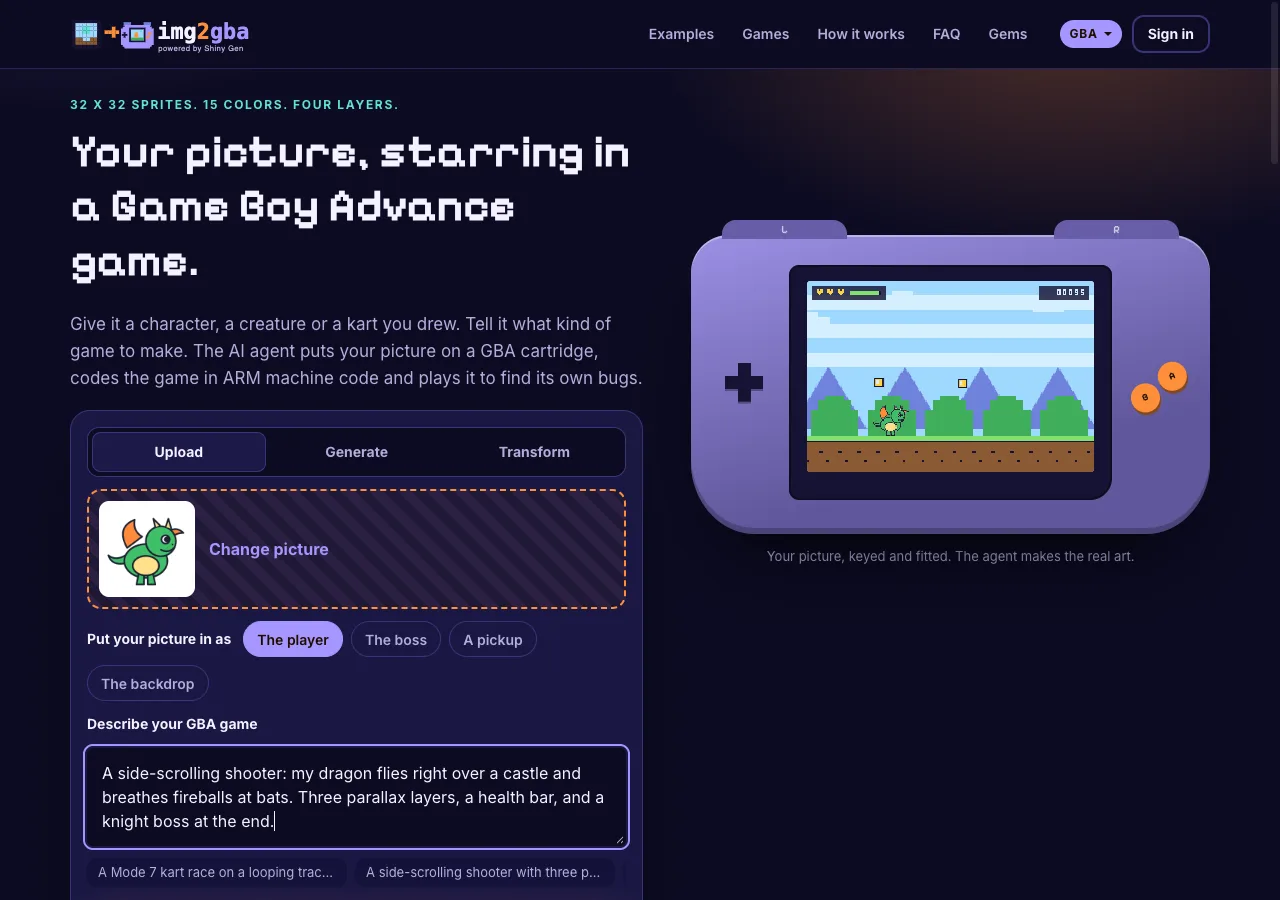
On the start card the dragon went in as The player, with this:
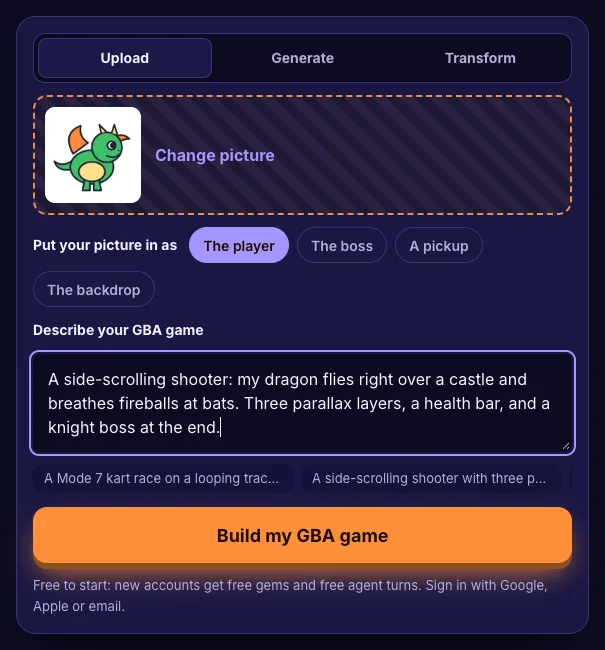
Before the agent saw it, the site cut the dragon out of its white background and sent it as a transparent PNG, saying so, so no gems went on background removal. For the player role it also told the agent to put the picture in the cartridge as ONE 32 x 32 sprite, a single hardware object so it stays whole, fitted to one 16-color palette, kept as the art and not redrawn, and brought to life in code.
What the AI did
A new account was made on the sign-in that opened on img2gba.com. The studio opened on the same domain, on the GBA engine, and the agent began with the picture and the words as its first message.
It imported the dragon, as drawn
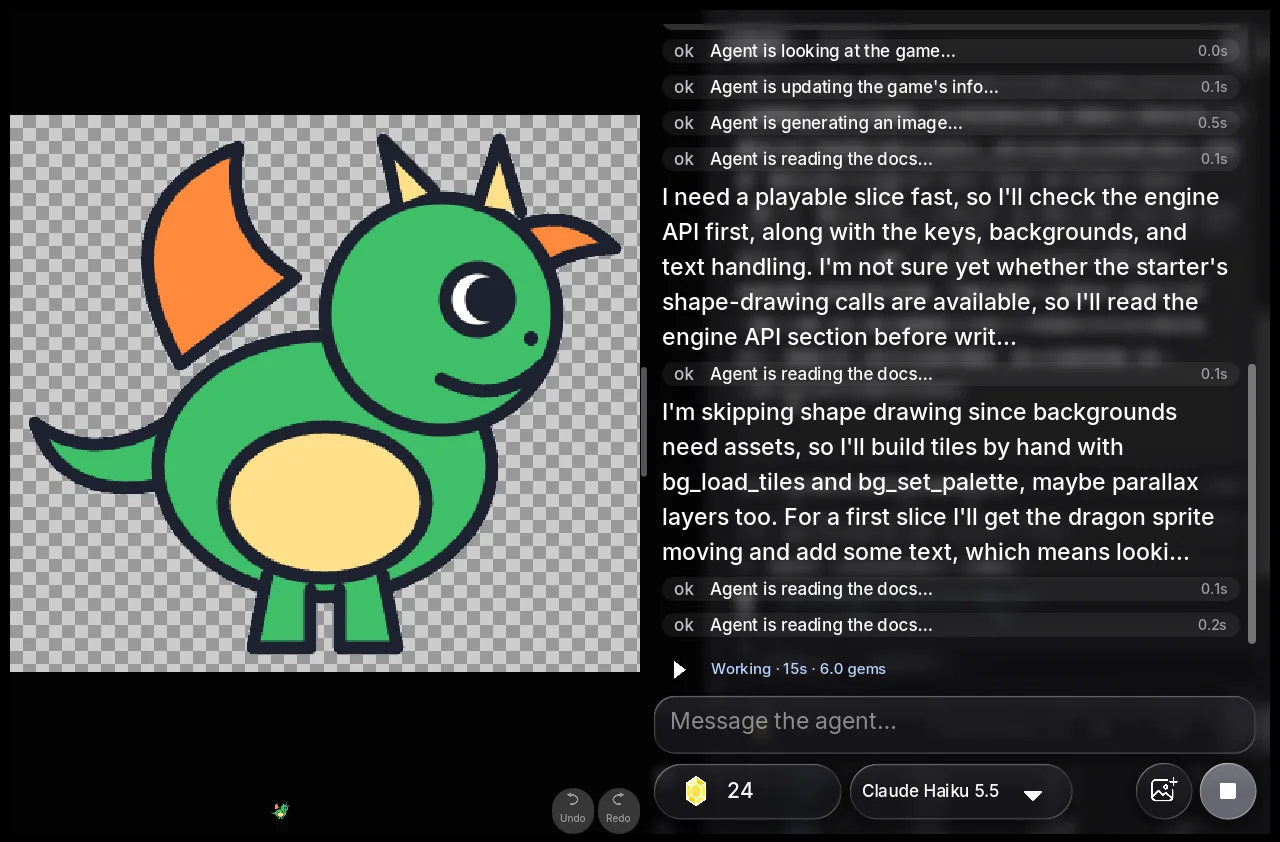
15 seconds in, the dragon was in the game's assets, background transparent, and the agent was reading the engine's reference for the keys, backgrounds and text. It decided to skip the shape-drawing helpers, because backgrounds need tile assets, and to build the castle tiles itself and set their palettes, "maybe parallax layers too".
It built a small first slice, then the rest
The agent's plan was deliberately small first: the title, the dragon moving, fireballs. It considered building the backgrounds as drawn tilesets, found that fiddly, and leaned toward generating the tile data in code when the game starts. Then came the bats, the castle and the HUD.
It added sound it could not hear
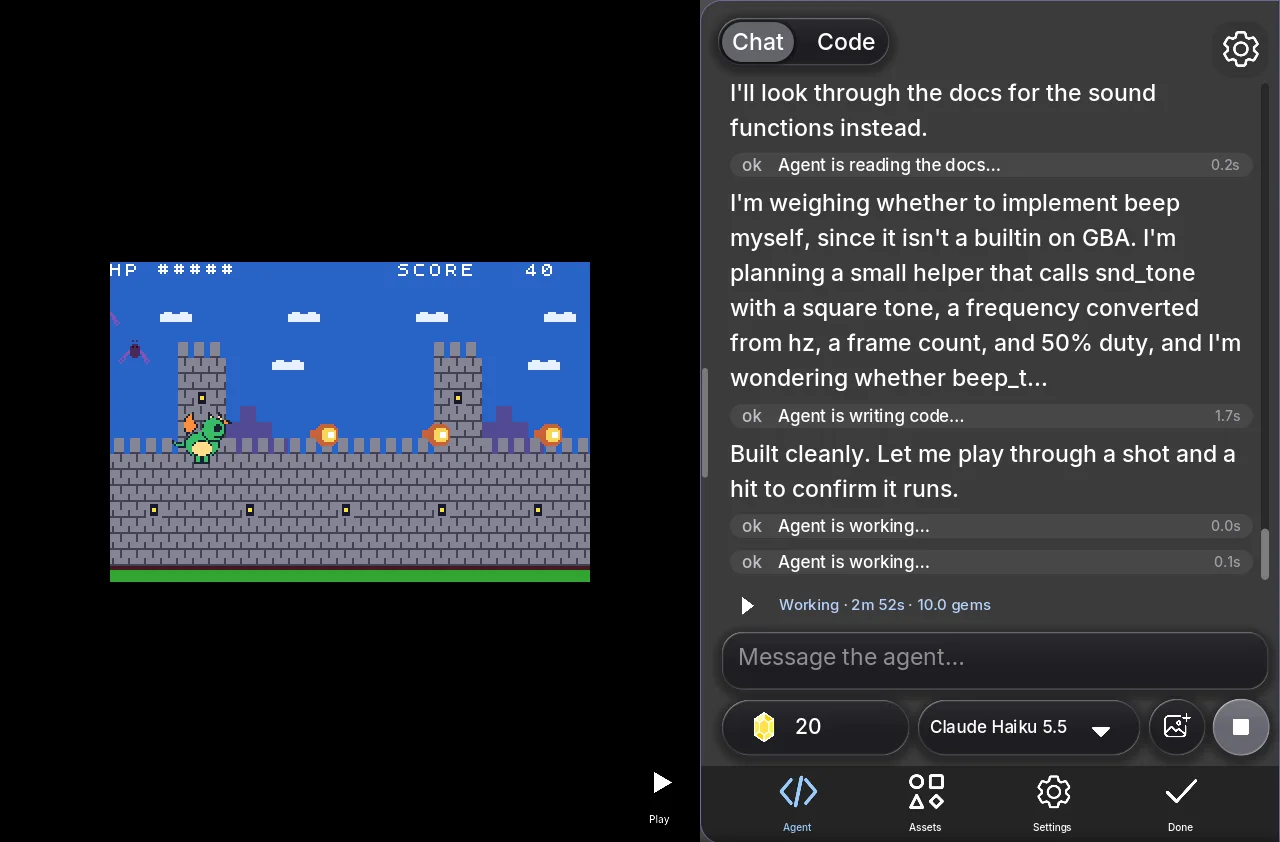
The GBA engine has no built-in beep, so the agent wrote a small helper that plays a square-wave tone for a given pitch and length, and used it for shooting, hits, taking damage and beating the boss. Then: "Built cleanly. Let me play through a shot and a hit to confirm it runs."
It tested the endings and said what it could not check
The handover says the fireballs hit the bats and add to the score, the knight boss arrives after about 20 seconds with a health bar of his own, and the win and game-over screens were both tested and restart on Start. It also said plainly that it could not hear the sounds itself, only confirm that the game runs with them. Controls: Start to play, the D-pad to steer, hold A to breathe fire. Agent time: 3 minutes 5 seconds; gems: 10 of 30, leaving 20.
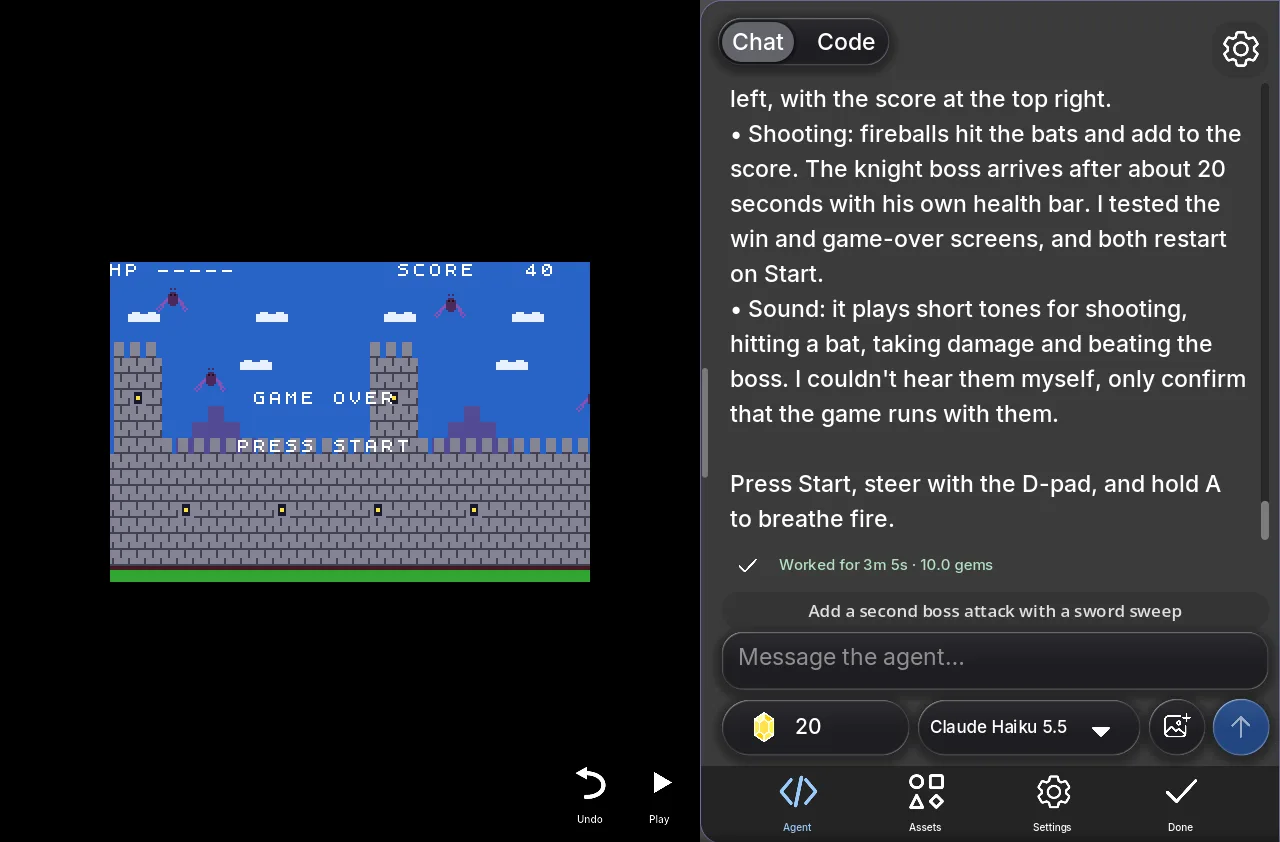
The game that came out
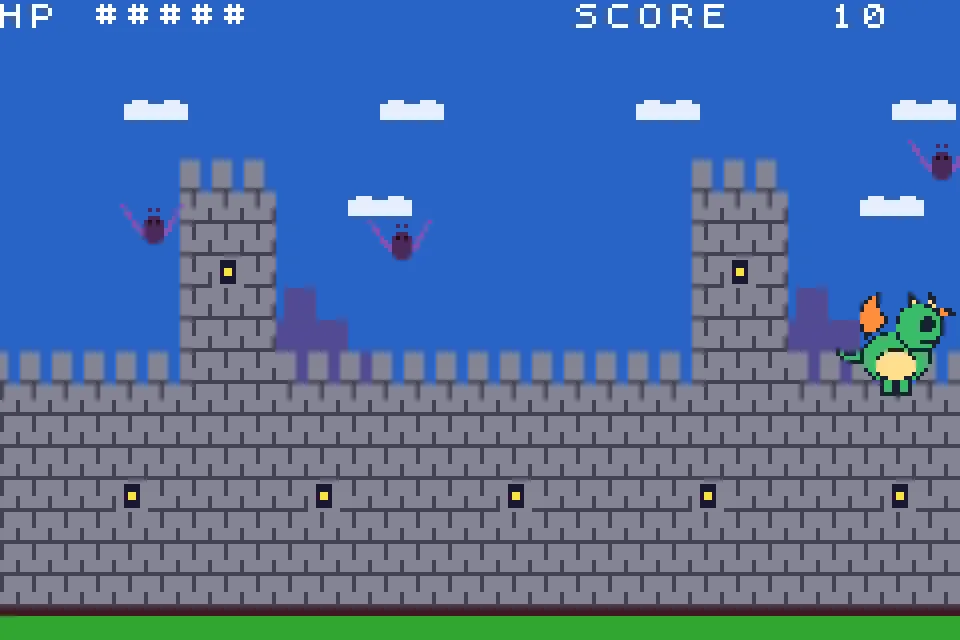
In play the dragon flies over a long gray castle wall with towers, purple bats flap in a blue sky, HP sits top left as five marks and the score top right. Between our screenshots the clouds and the castle move by different amounts, so the layers really do scroll at different speeds, as the prompt asked. In our short play the dragon lost one of its five HP marks, and the score showed 10.
We did not reach the knight boss in our short play, so we are reporting it as the agent described it, not as something we saw.
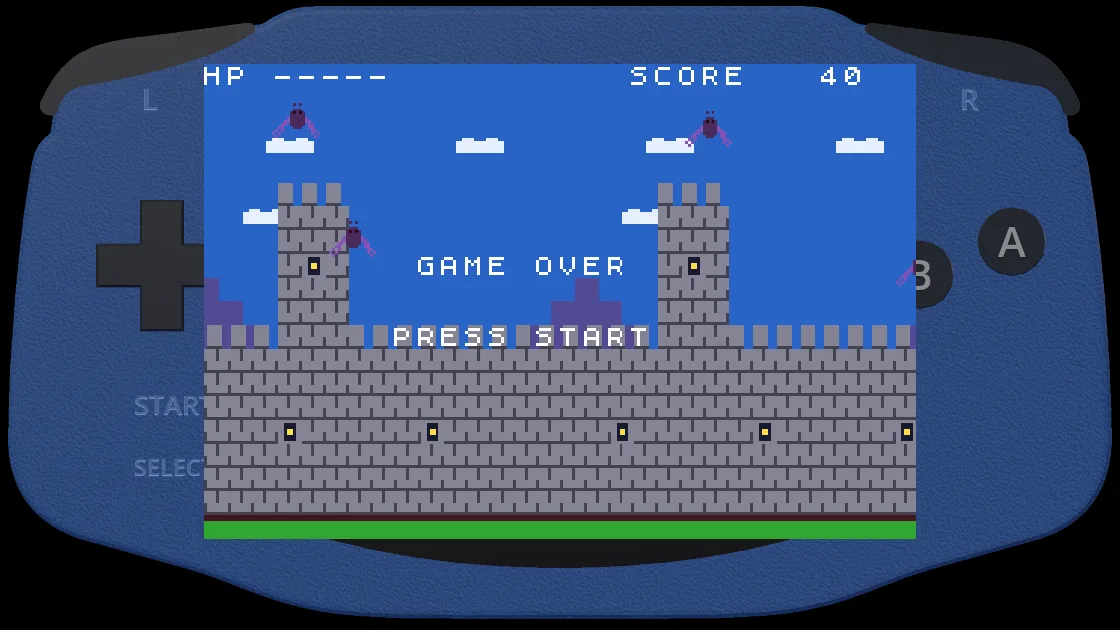
Why the dragon came through so well
- One sprite, not a puzzle. A GBA hardware sprite can be up to 64 x 64, so a 32 x 32 dragon is a single object. Nothing has to be stitched together, and nothing can come out scrambled.
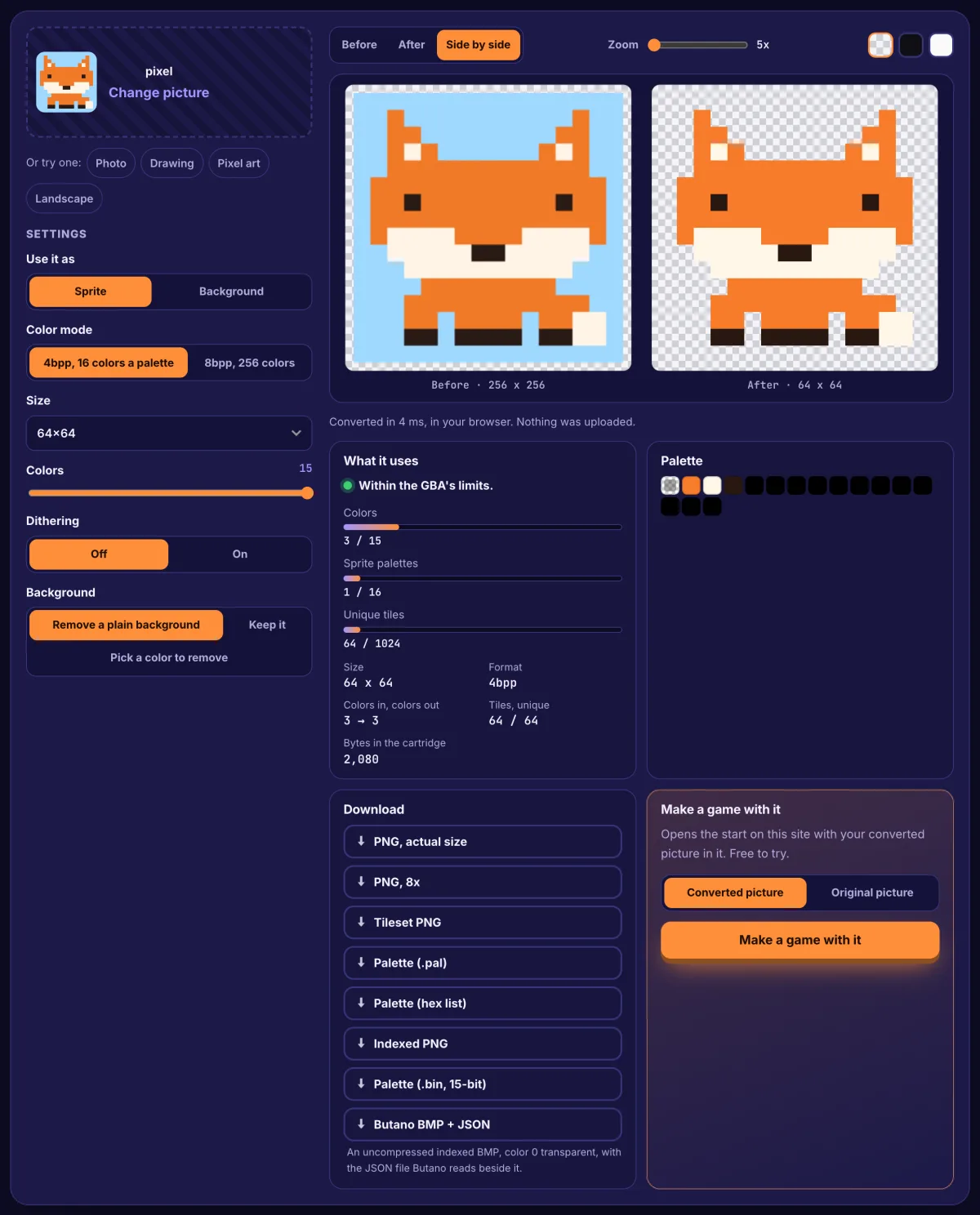
- 15 colors is plenty for a flat drawing. The cartridge picked the 15 colors that best match the picture from the console's 32,768. A drawing with six or seven colors keeps all of them.
- The outline does the work. At 32 x 32 on a 240 x 160 screen, the thick outline is what makes the eye, the horns and the wing read.
The same dragon as a boss
In a separate session, the same drawing went in as The boss for a one-screen knight-versus-dragon fight. The agent made it one 64 x 64 sprite, the largest single sprite the GBA has, whole and in color, in 3 minutes 4 seconds for 10 gems. Choosing a role is all it takes to change how big your picture is in the game.
Make your own
Use a drawing, a photo of a toy, or ask the Generate tab for "a small green dragon with orange wings, 16-bit pixel art" (3 gems for Pixel art). Choose The player, describe the game with one twist, and press Build my GBA game. The how-it-works guide explains every option on the card.
FAQ
Is this a real Game Boy Advance game?
Yes. The agent wrote it in a small C-like language and Shiny Gen compiled it to ARM Thumb machine code, linked with the dragon into a .gba cartridge image. The emulator in the browser ran those bytes, and so would any GBA emulator or a flash cart. Exporting the .gba file needs any one purchase, from $2.99.
Did the agent draw a new dragon?
No. The dragon in the game is the drawing that went in, cut out, scaled to 32 x 32 and mapped to one 16-color palette.
What did it cost?
10 gems, from the free gems every new account gets. Nothing was bought.
Did it do the three parallax layers?
The clouds and the castle scroll at different speeds in our screenshots. The agent's handover did not list the layers one by one, so if you want exactly three, say so in a follow-up message and it will rebuild and replay.
Can I keep going?
Yes. Ask in the same chat ("add a second boss attack with a sword sweep" was one of the suggestions the studio offered), or edit the code yourself in the Code view, which costs nothing.
Further reading
Last updated: November 17, 2026